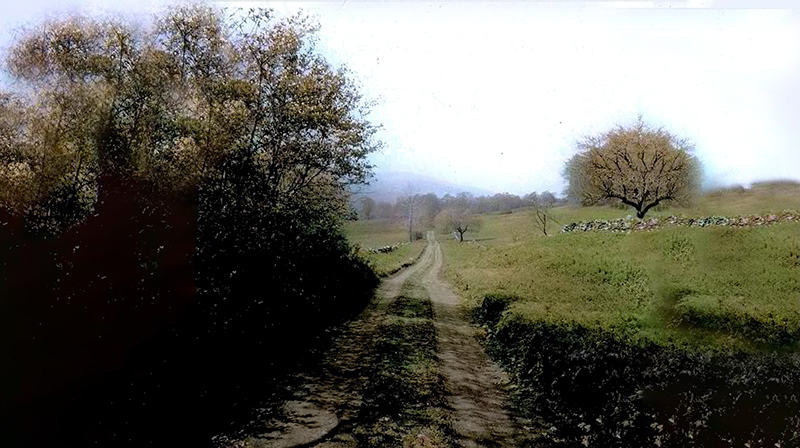
Image: Colorized Hall Road - (Scott Road) - 1959
The Hall Tavern
Captain Jabez Hall - 1761
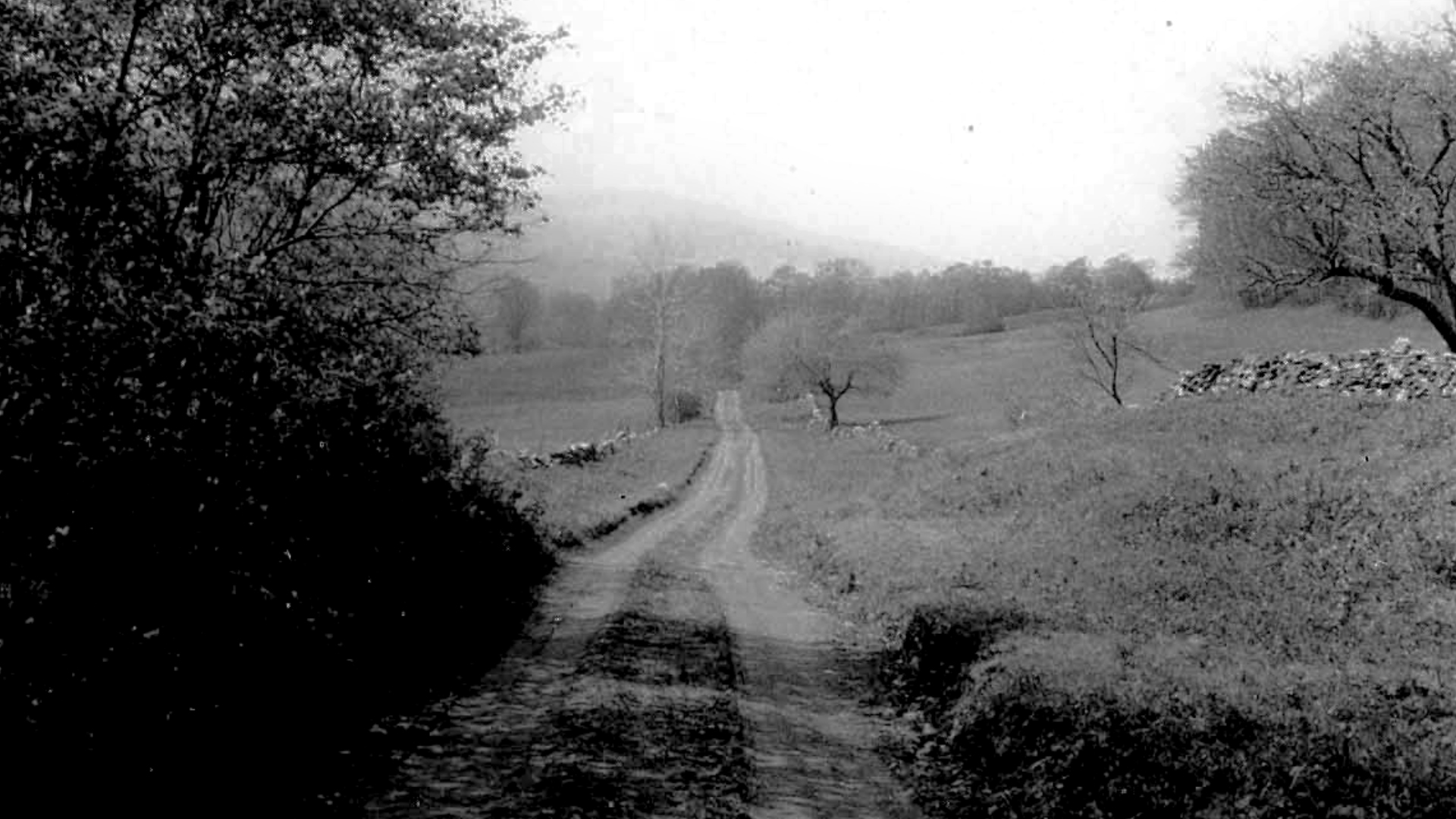
Hidden deep atop a quiet hill on Scott Road, behind a weathered stone wall, in horse pasture and a flourishing lilac bush, lies the foundation of the old Hall Tavern. Built in the late 18th century by Captain Jabez Hall and his sons, this once-thriving stagecoach stop was more than just a tavern—it was a community hub where stories were shared, deals were struck, and history was made.
Captain Jabez Hall was no ordinary man. A Revolutionary War hero, a larger-than-life pioneer, and a man of unshakable determination, he lived up to his biblical namesake with fiery spirit and leadership. His tavern, with its 2nd floor grand ballroom, massive stone steps, and towering silver poplar trees, became a landmark of its time.
But Jabez’s story began long before the Revolution. With news of the Battle of Quebec (December 31, 1775), he rallied men from Lanesboro to fight in Canada. In a moment of dramatic flair, he leaped onto a table in front of his tavern with a black bottle of rum in each hand. Striking his heels together three times and clashing the bottles above his head, he shouted, “Who goes with me to Canada?” His charisma was irresistible, and a full company was immediately enlisted, including his two sons, Gershom and John, while his youngest, Lyman, just 19 years old, joined as a valet.
The journey to Quebec was grueling. The men faced brutal winters, the horrors of smallpox, and the death of General Montgomery. Captain Jabez himself fell ill soon after arriving in Canada and was pronounced convalescent, only to die suddenly in the night under suspicious circumstances. Some believed he was poisoned by a disgruntled townsman, a grim reminder of the dangers of the time. Despite these hardships, his sons returned home, carrying on their father’s legacy of resilience and service.
The tavern itself was legendary. Its ballroom hosted grand celebrations, and its walls echoed with laughter and tales. One famous story involves Jabez’s grandson, also named Jabez, and his friend Colonel William Waterman. After a long day of tax collecting, Jabez retired early to the tavern’s ballroom to sleep. Waterman, arriving late, tried to sneak up the stairs to surprise him, only to be caught in Jabez’s iron grip and nearly hurled down the steps. It was a moment of humor and camaraderie that captured the lively character of the Hall family and their tavern.
But time has a way of hiding the past. The tavern was destroyed by fire in the 19th century, and its foundation slowly vanished beneath the earth. For decades, the site has lain hidden, known only through stories and a few tantalizing clues.
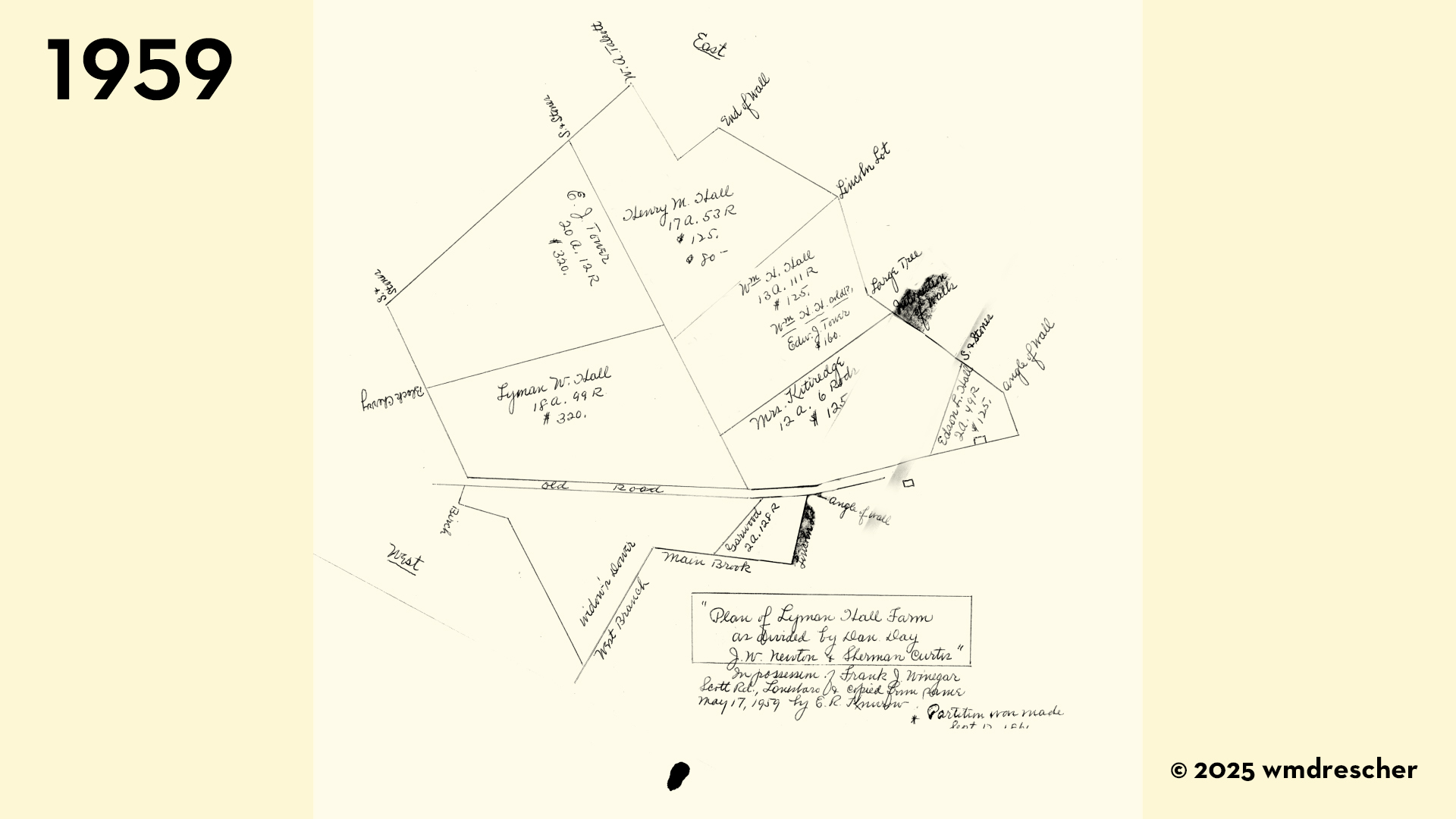
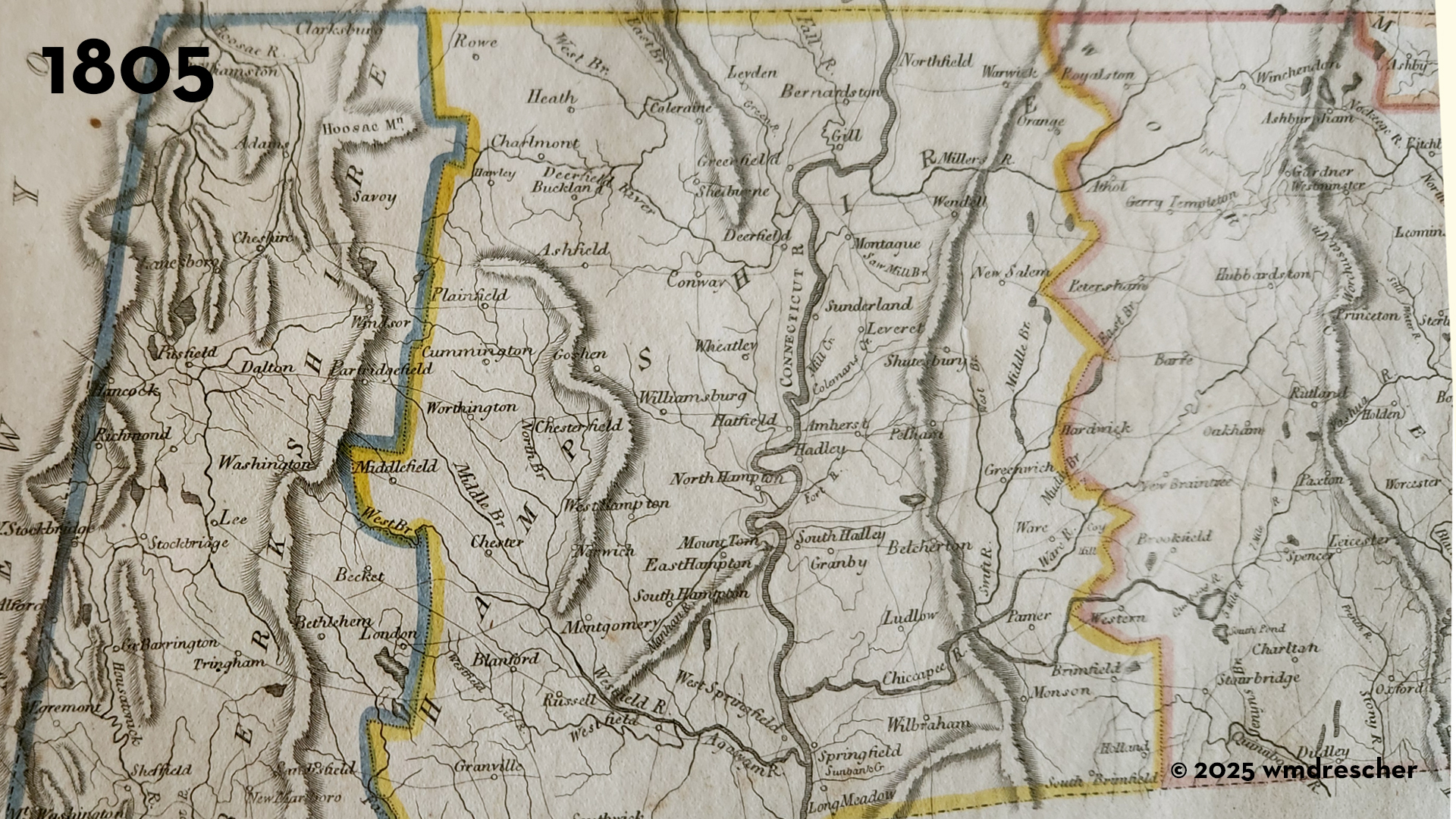
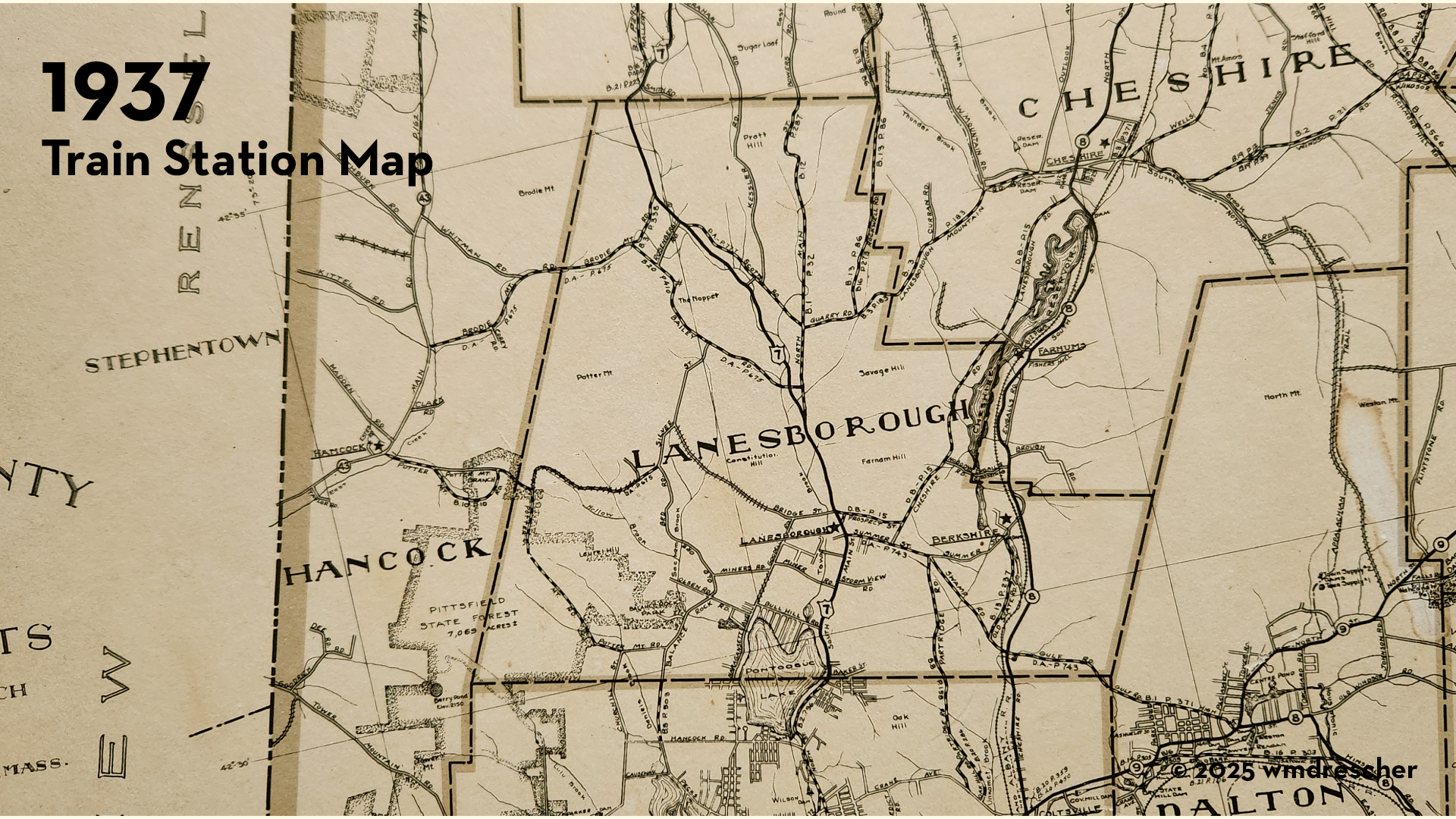
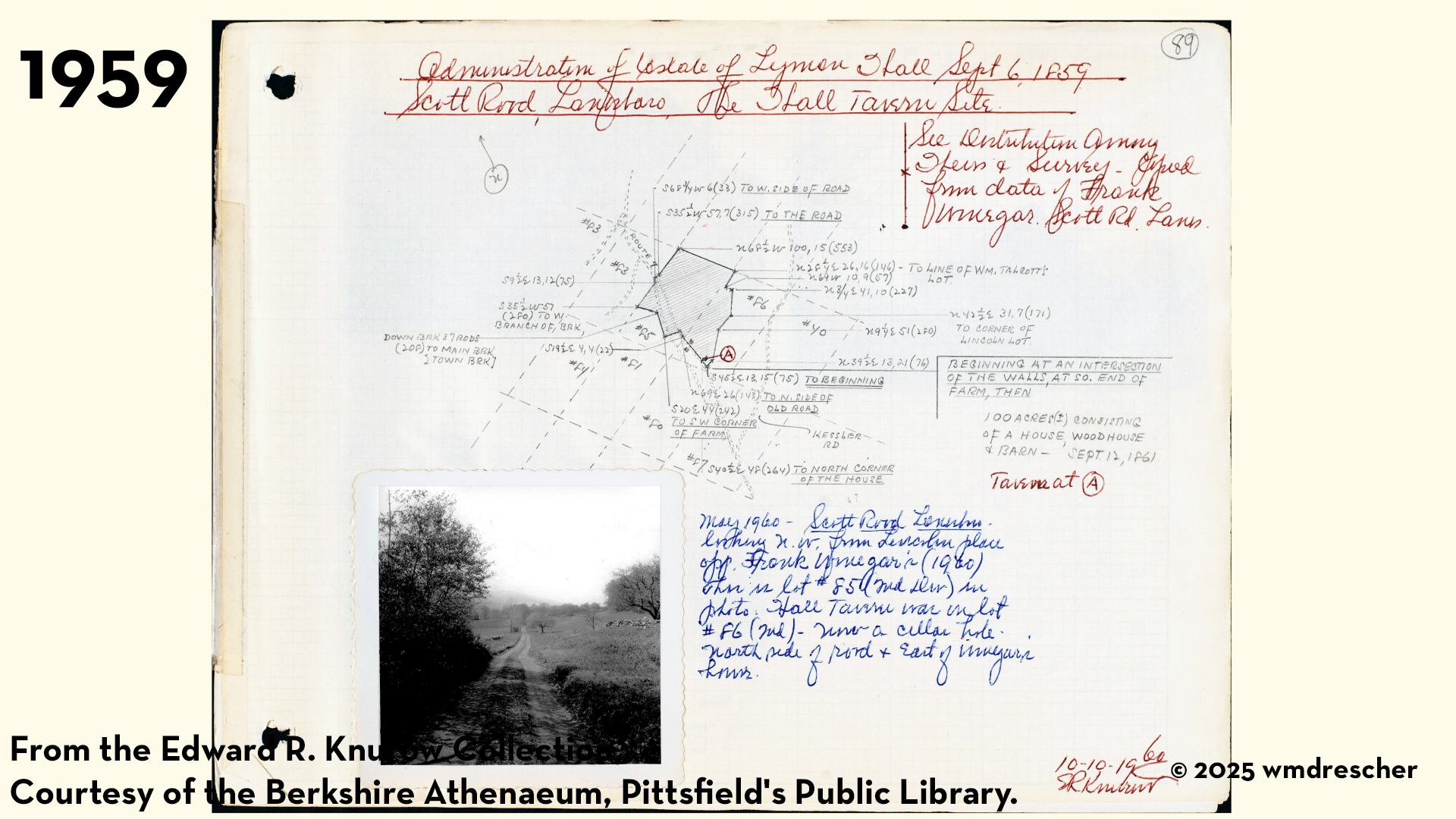
Some Maps and photos from the Edward R. Knurow Collection Courtesy of the Berkshire Athenaeum, Pittsfield's Public Library. © 2025 ©wmdrescher
Uncovering the Secrets of Hall Tavern
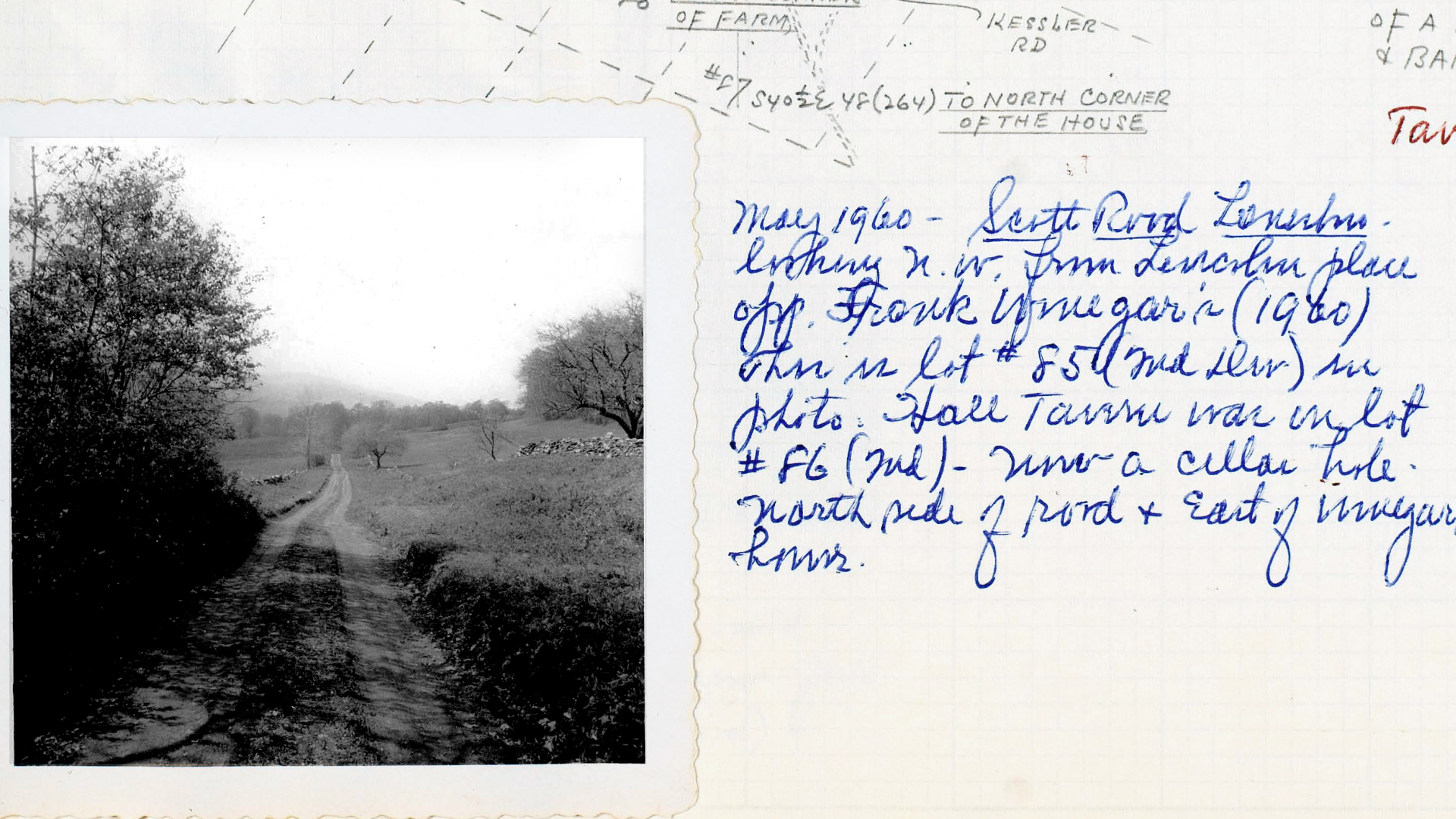
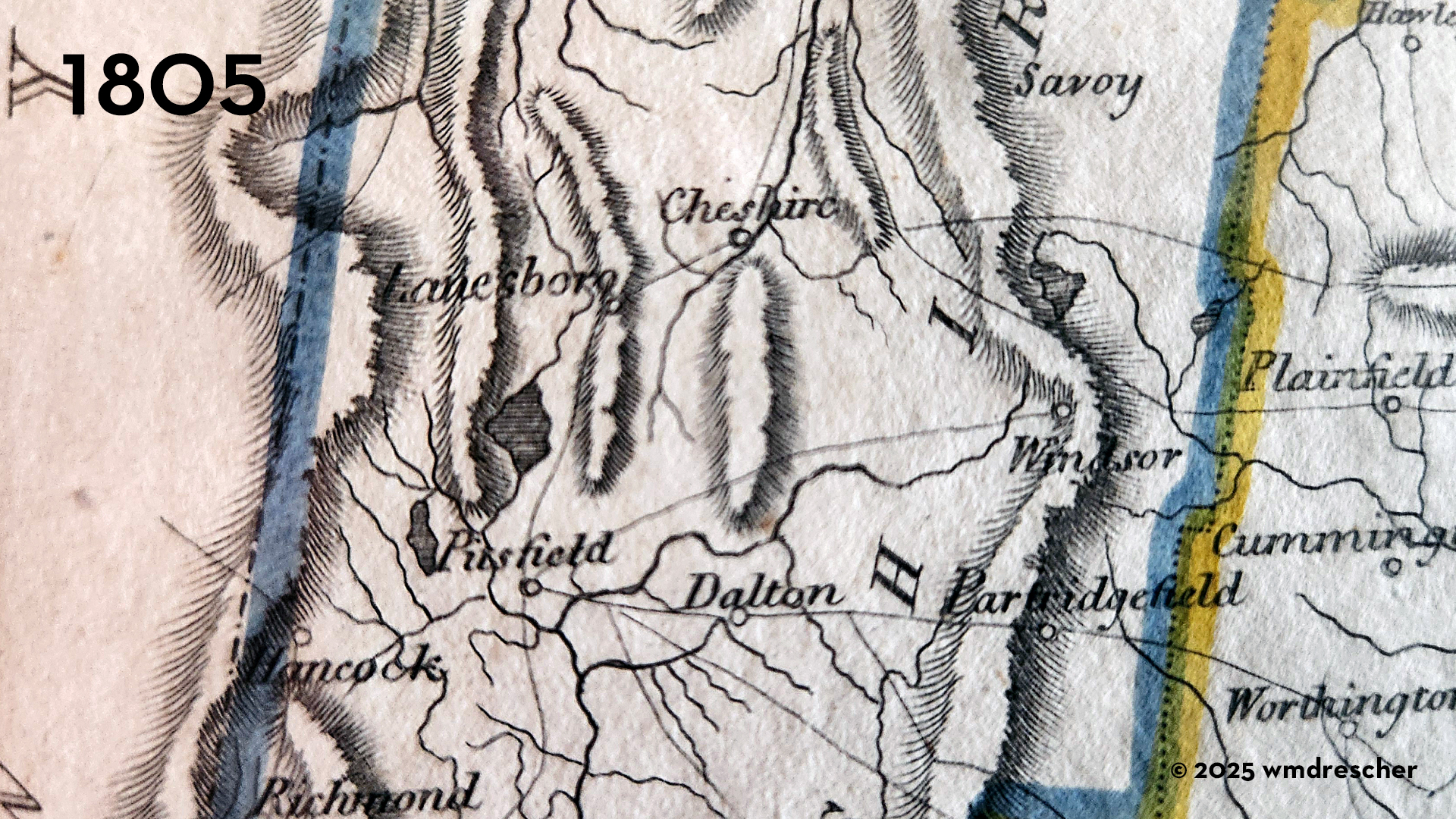
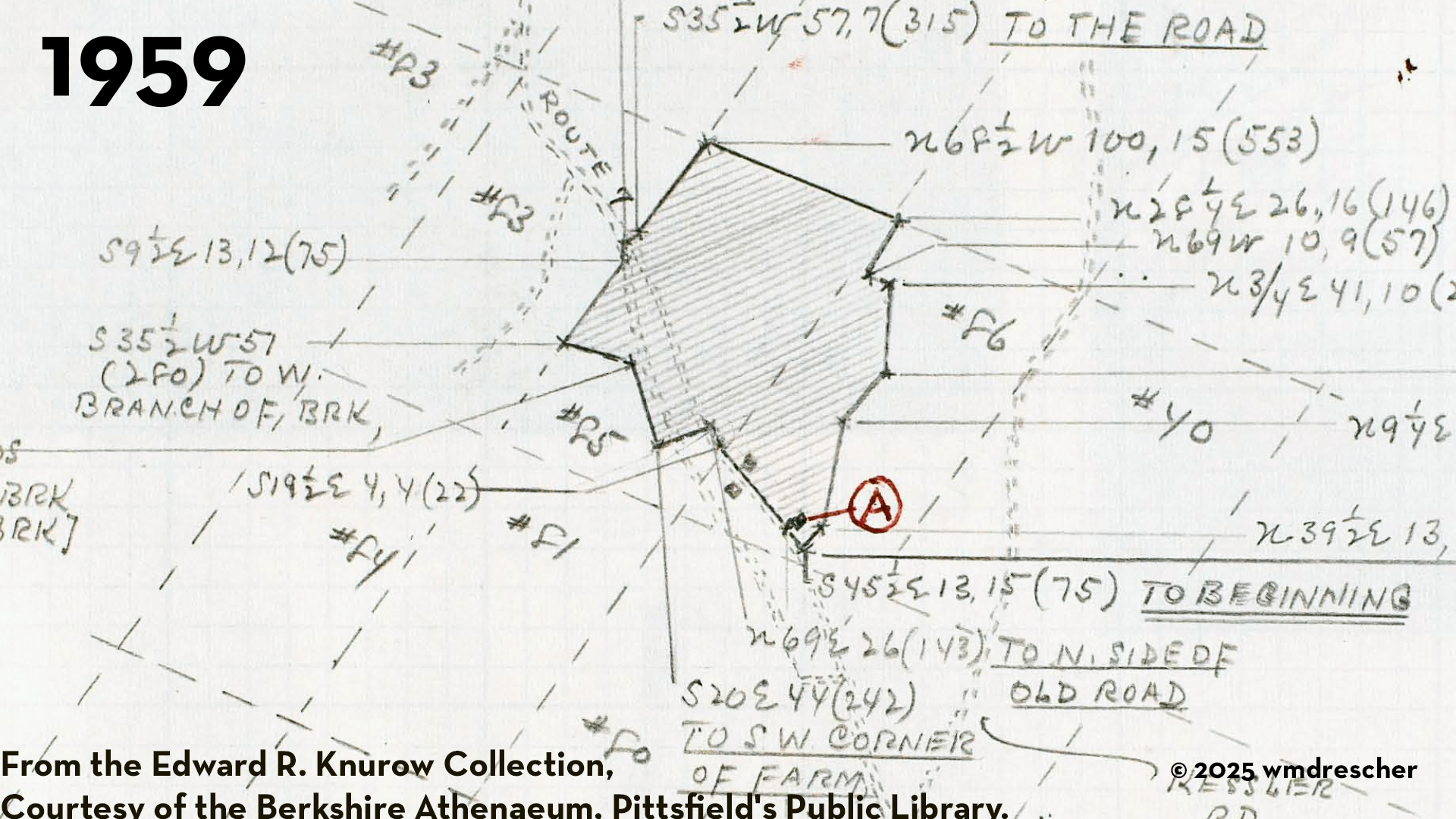
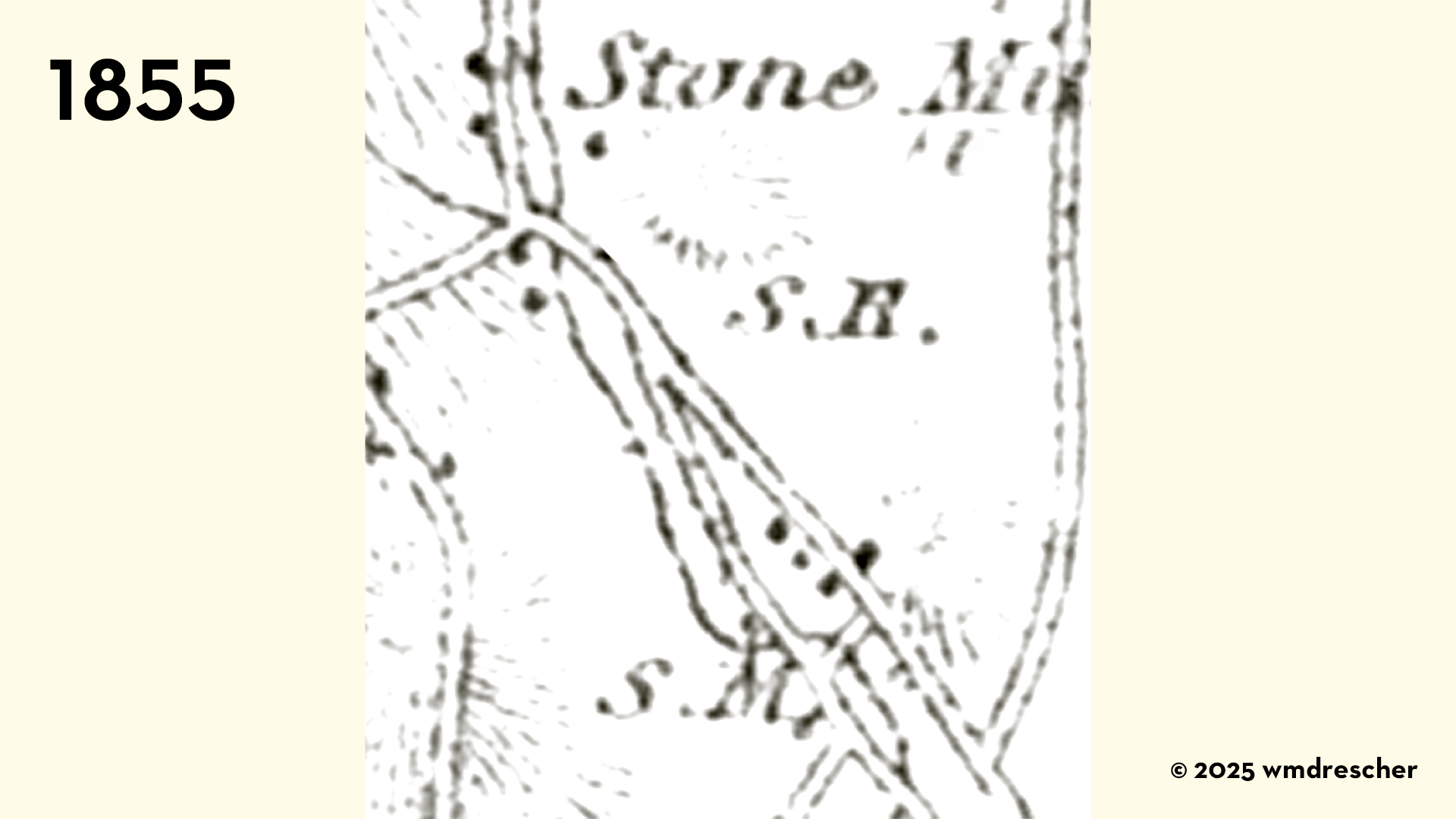
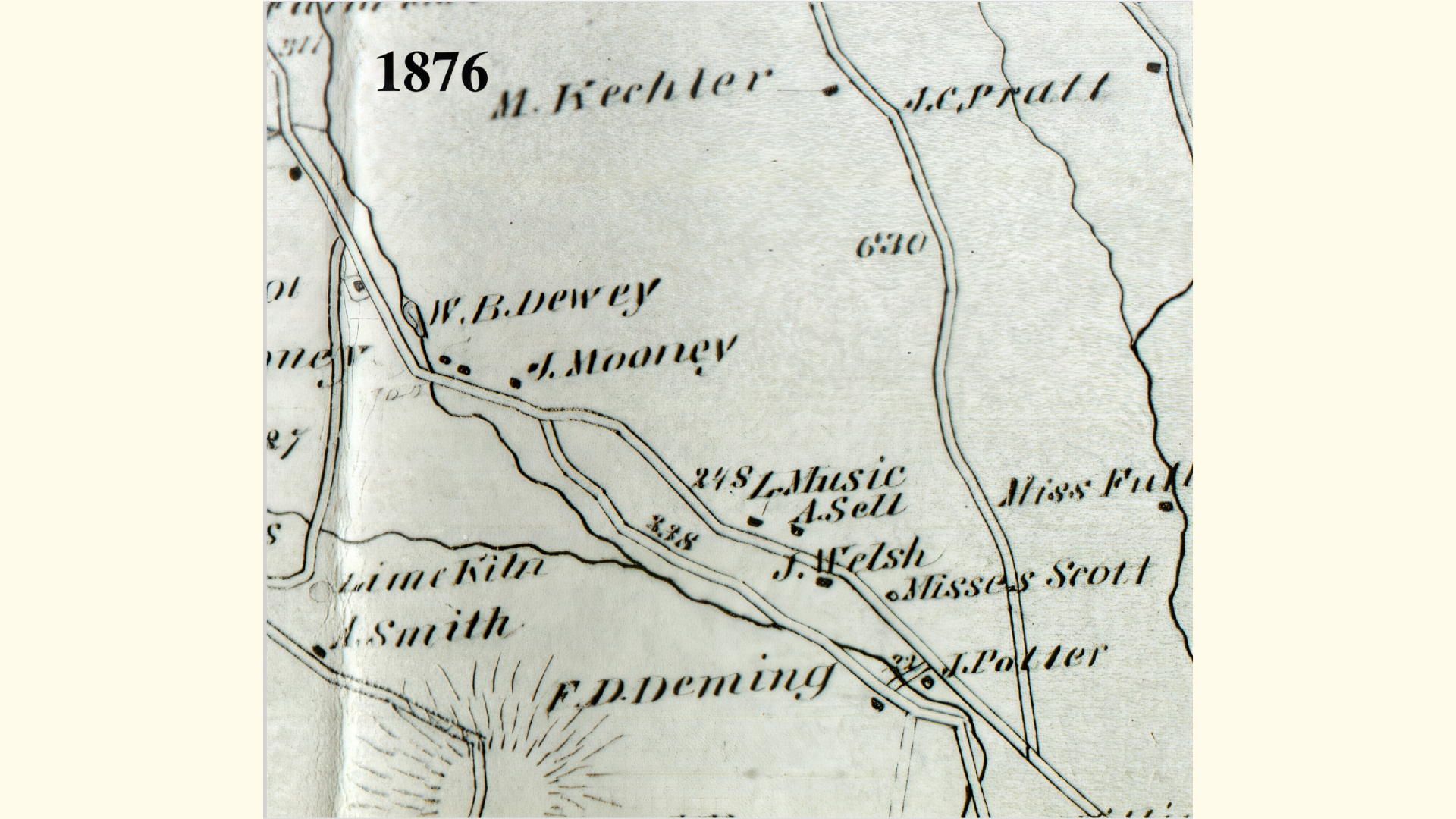
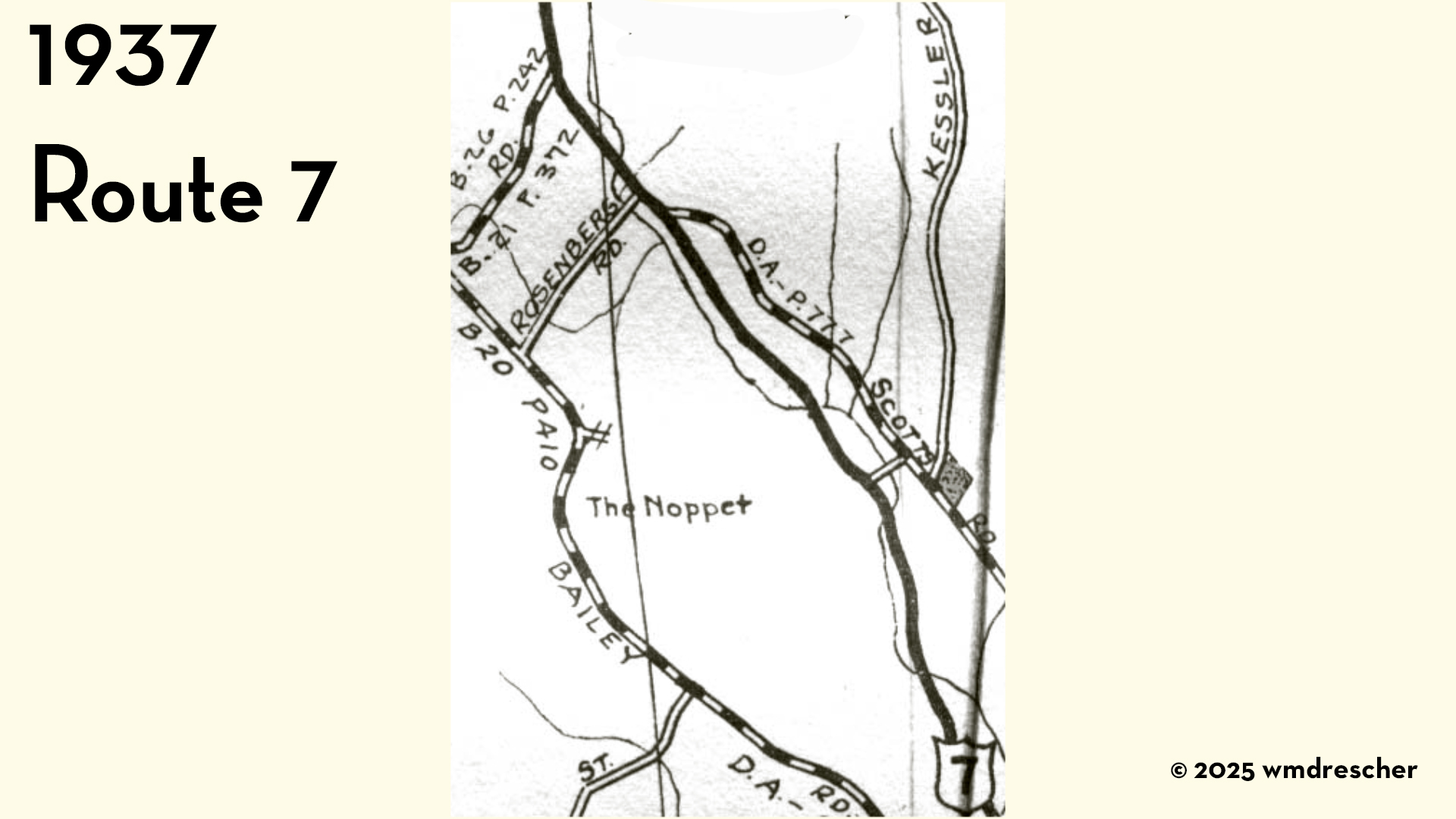
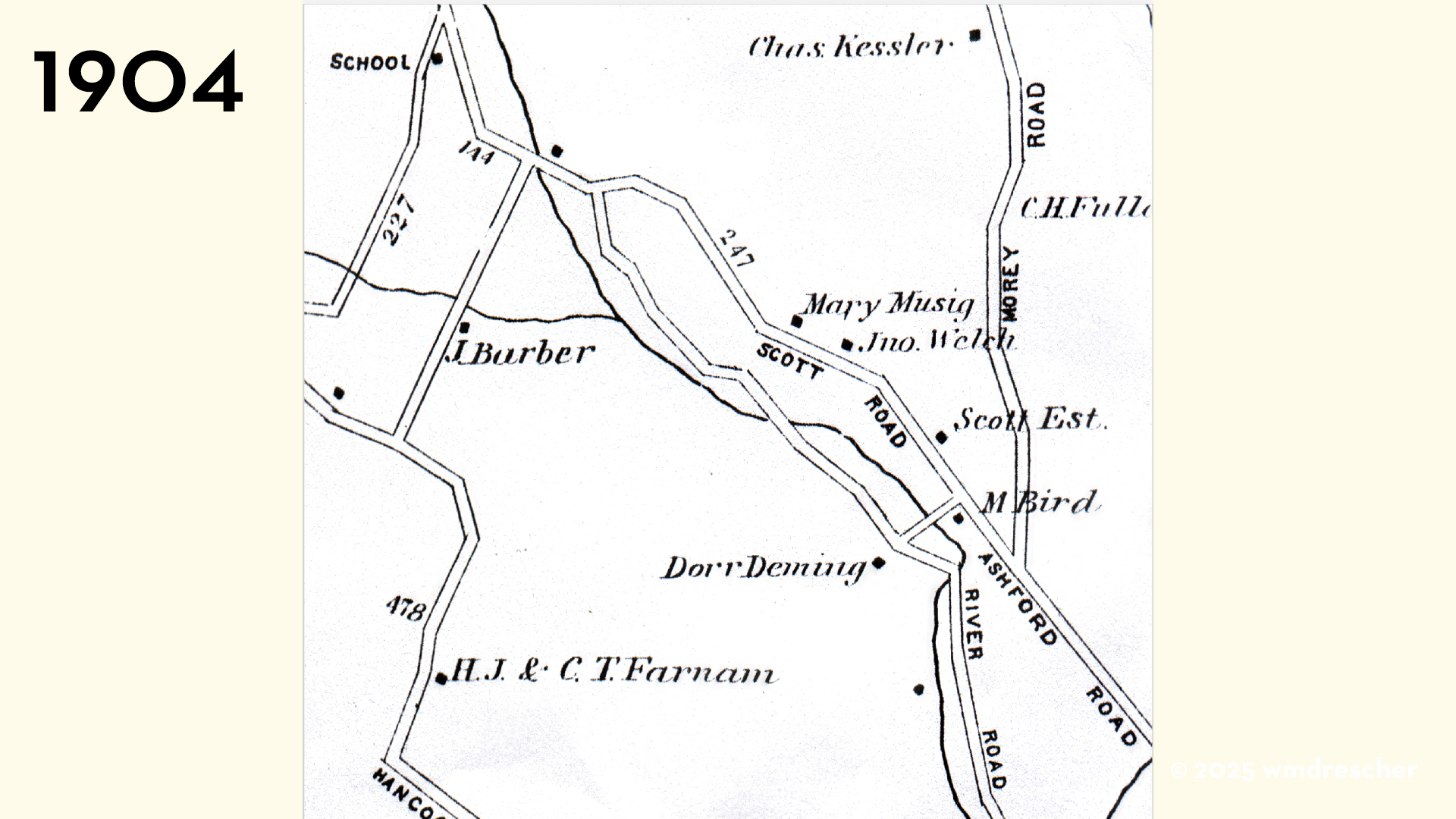
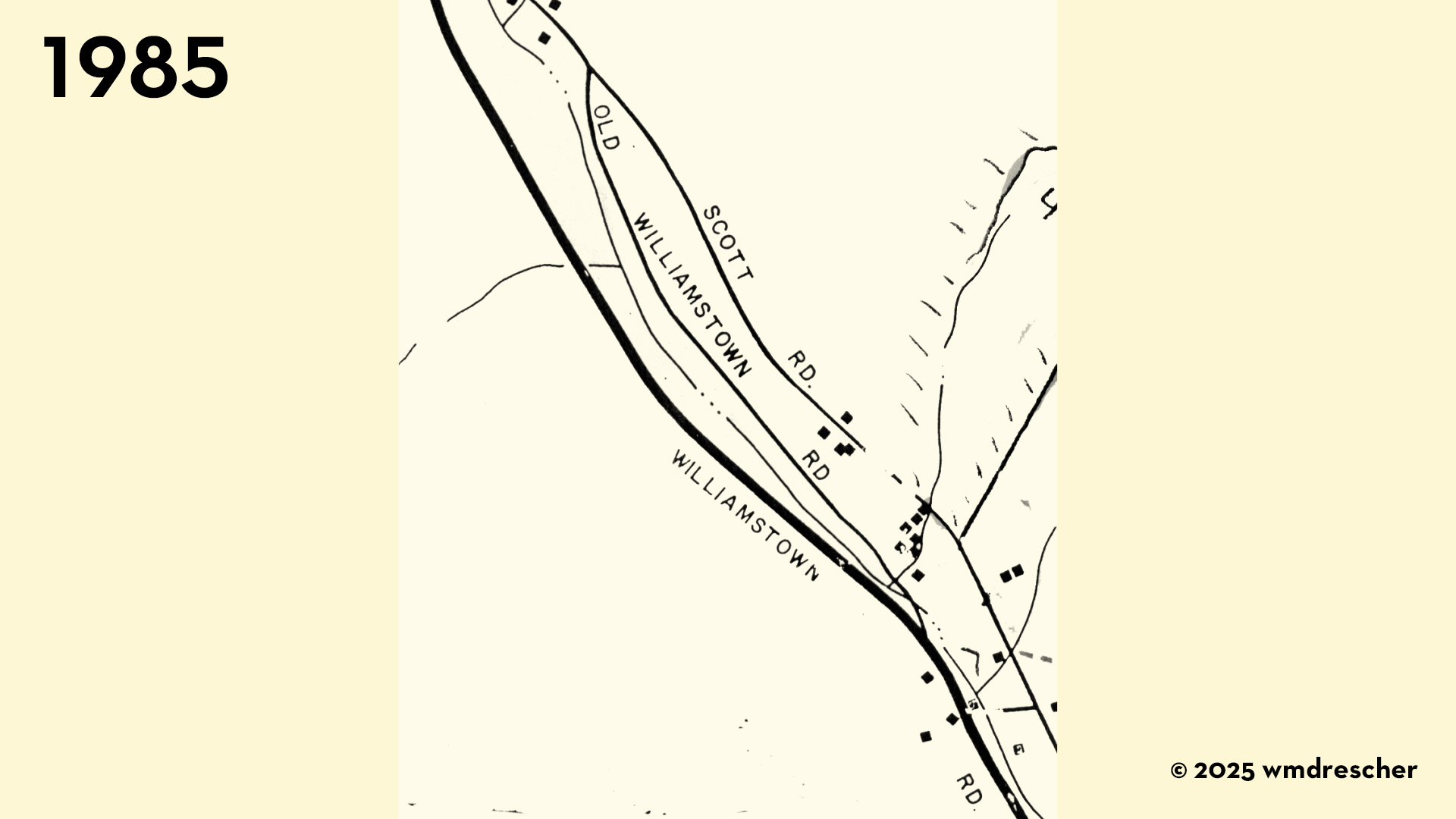
Over the years, we have collected many maps of the property going back before Lanesborough existed and was called New Framingham. They show the original Lots 85 and 86, the streams, run-offs, farm buildings, borders, and historic roads. The Hall Road became Scott Road sometime in the late 1800s, and Kesler Road was once known as Morey Road.
The original Hall Farm stretched from the Town Brook, which runs along the edge of the property, up into the forests of the hills behind the house, extending all the way to the Morey homestead on what is now Kesler Road. The land was once a mix of pasture and woodland, providing a rich foundation for early settlers and shaping the landscape we see today.
Starting this year, we are getting ready to uncover its secrets With help from an archeolgist we hope to bring the Hall Tavern’s story back to life and conserve it and its path in our history.



© 2023 wmdrescher